
Perfect squared terms
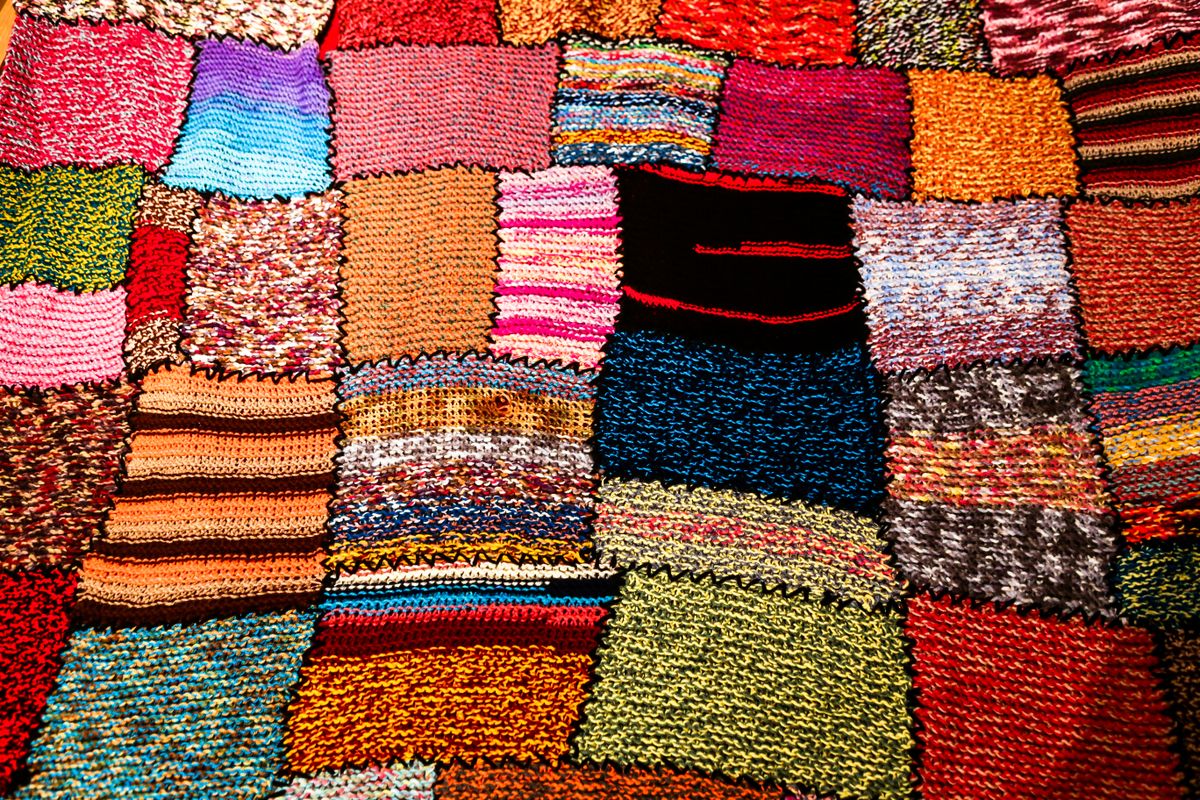
Think

The blanket in the photo depicts an interesting pattern of squares.
How do you think the squares could be related to polynomials and their factors?
Some polynomials, like perfect square trinomials, follow certain patterns that allow you to factor them quickly and easily. What are these patterns and how can you recognize them?


Difference of squares
Factoring type 2
Notebook

Expand and simplify the following equations. Use your notebook to complete the questions and compare your work to suggested solution.
How are the terms in the factored form alike? How are they different?
The examples in the factored form show the same terms but opposite signs.
A binomial of this type is called a difference of squares.
Difference of squares in expanded and simplified form
The following table shows the binomial products in both expanded and simplified form.
Notebook
Use your notebook to answer the following questions, then compare your work with the suggested answers.
What pattern do you notice in the expanded form?
In the expanded form column, you notice that the middle two terms are opposites. These terms eliminate each other when added together in the Simplified Form column.
In the Binomial Product column, you notice that this pattern will always occur because the binomials have identical first terms and second terms that are opposites.
What pattern do you notice in the simplified form?
In the simplified form column, you should have noticed that each result is a difference (subtraction). The terms of the simplified form are the squares of the terms in the binomials; hence this situation is called the difference of squares.
Explore this!

Let’s explore the following video to better understand the detailed steps involved in factoring the distance of two squares.
A real-life example of how to explain difference of squares
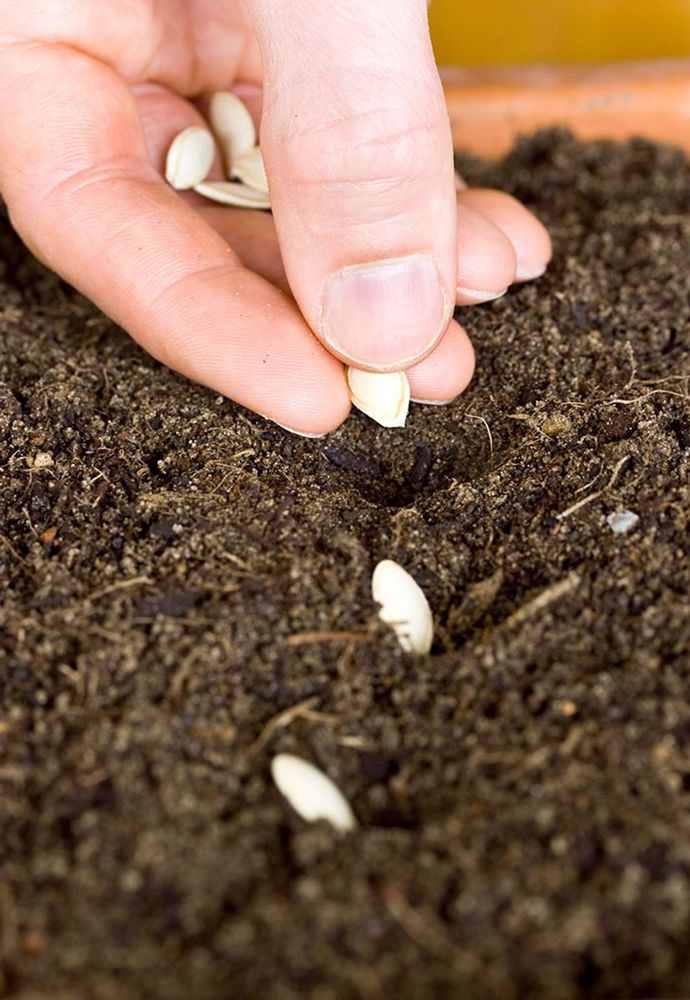
Canadian farmers contribute agriculturally and ecologically to our way of life. Have any of your ancestors been farmers? Before grocery stores, many Canadian families farmed to produce their own food. The agriculture industry has been positively impacted by the contributions of Indigenous peoples. The history of Indigenous agriculture dates back several millennia. Currently, 60% of the world's cultivated crops are Indigenous foods of the Americas.
Pretend you are a farmer and you have a rectangular garden where the area is represented by the expression .
Notebook
In your notebook, work through the following questions, then compare with the suggested answers provided.
What possible expressions could represent the length and width of the garden?
Since the area of a rectangle is calculated by multiplying the length by the width, we are trying to find two factors of .
Step 1: Determine if the expanded form is a difference of squares
Three things must be true:
- Expression must be a binomial (two terms)
- Both terms must be a perfect square
- There must be a subtraction between the terms
Is the expression a difference of squares?
Yes. It is a binomial. Both and 49 are perfect squares. There is a subtraction between the terms
Step 2: Factor using the square roots of each term
Notice that in the factored form, both brackets have the same terms with opposite signs
Factor the expression by determining the square roots of each term.
Here we use the square roots of each term
The length and width of the garden could be and .
Factoring expressions using difference of squares practice

Perfect square trinomials
Factoring type 3
When two binomials that have the same first terms and opposite second terms are multiplied, they produce a difference of squares.
Let's examine the product of two identical binomials. They have the same terms and the same signs.
Expand and simplify the following. Check the suggested solution:
Try it!

Expand and simplify the following. Assess your work using the suggested solution:
The product of two identical binomials is called a perfect square trinomial.
Perfect square trinomials in expanded and simplified form
The following table indicates the products of identical binomials in both expanded and simplified form.
Notebook
Use your notebook to complete the following questions, then compare your work with the suggested answers provided.
What pattern do you notice in the expanded form?
In the expanded form column, you can identify the following:
- The first term is the square of the first term in the binomial.
- The last term is the square of the second term in the binomial.
- The middle terms are the same with the same signs.
What pattern do you notice in the simplified form?
In the simplified form column, you can notice that the middle term is double the product of the two terms of the binomials.
In the preceding table’s third column:
- row a) results in
- row b) results in
- row c) results in
- row d) results in
- row e) results in
Explore this!
Let's explore the following video to better understand the detailed steps involved in factoring perfect square trinomials and the difference of two squares.
A real-life example of how to explain perfect square trinomials
The patterns discussed previously will always occur because the binomials in the product are equal; that is, they are squared binomials such as
Whenever a binomial is squared, the simplified form results in a perfect square trinomial and has the form, or pattern,
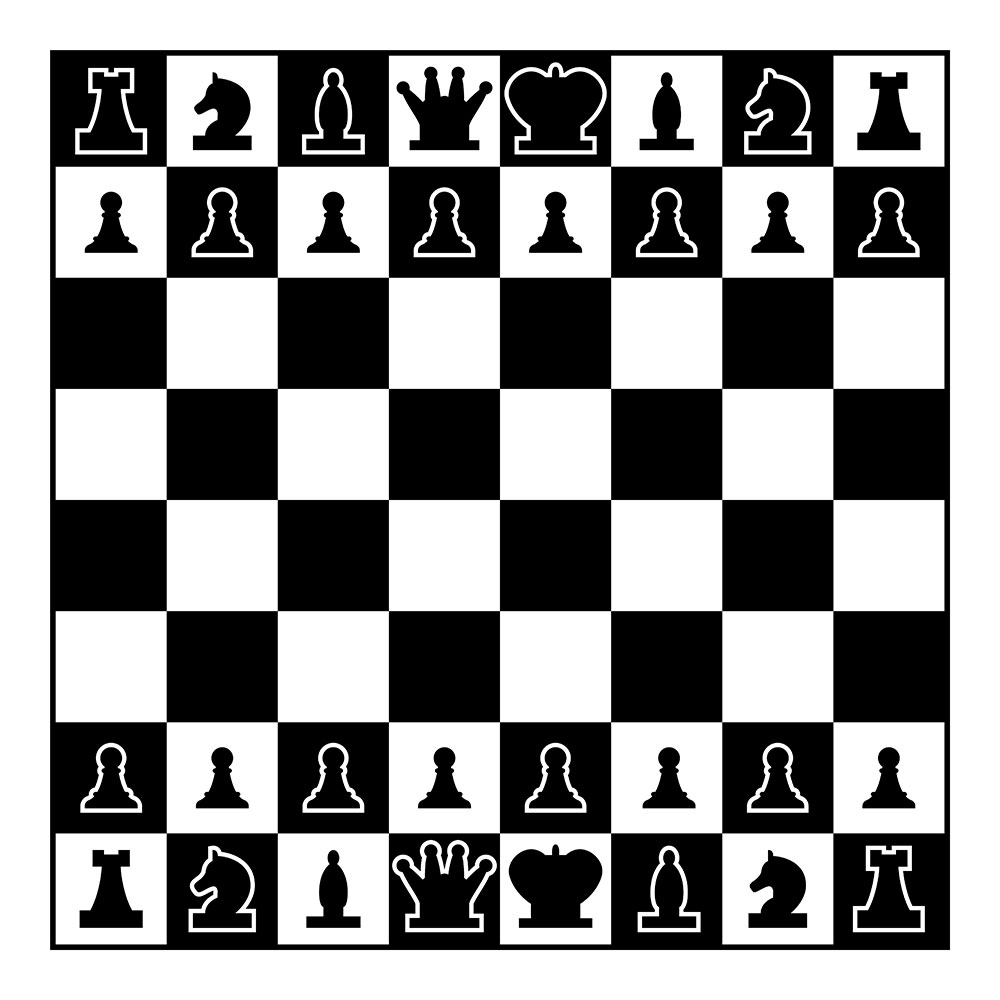
Using the example: Determine the side length of a chess board given the area is
The chess board is a square so we expect the length and width to be identical.
Notebook
Use your notebook to work through the following problems. Compare your work with the suggested answers.
Step 1: Determine if the expanded form is a perfect squares expression
Two things must be true:
- The first and last term must be perfect squares.
- The middle term must be double the product of the roots of the other terms.
Is the expression a perfect squares expression?
Yes. and 36 are perfect squares. is twice the product of the squares of the other terms.
=
=
Step 2: Factor using the square roots of each term
Notice that in the factored form, both brackets have the same terms.
The sign in the bracket sho expanded form.
or
, where the terms in both brackets are the same.
Factor the expression
Note: use the square roots of the first and third terms.
=
Each side of the chess board has a length of
Factoring expressions using perfect square trinomials practice
Factor the following expressions. Be sure to verify that the trinomial is a perfect square before using the pattern to factor.
You may attempt to factor this expression, but you probably cannot factor this trinomial yet. This trinomial is similar to the first one; however, notice that the middle term of this trinomial does not fit the pattern of . That is, , not . Therefore, it cannot be factored as a perfect square trinomial. Later, in this lesson you’ will learn a strategy for factoring trinomials of this form.

Perfect square and difference of square review
A polynomial of the form is a perfect square trinomial and can be factored as .
A polynomial of the form is a difference of squares and can be factored as .
Self-check
As a self-directed learner, you will be reflecting on your learning process and checking your understanding in order plan for success. Make a note of your understanding of the success criteria from today’s activity.
Rate your understanding on a scale of five to one.
Five means “I have a thorough understanding.” One means “I am confused.”
Are you able to
Math Journal

At the end of the course, you will fine-tune 8 entries (two from each unit) from your math journal and submit them as your "Culminating Assessment - Math Journal" (Opens in new window).
Create a Summary of the Factoring Types in this Learning Activity
You have learned to recognize two new patterns while factoring: the difference of squares and perfect square trinomials. Think about your understanding of factoring each type of expression. When would you use it? How you would describe your steps to a friend who has not learned the concept yet? Do you find factoring polynomials of this type straightforward or is it challenging? Why?
Add these types of factoring into your math journal along with the situations when you use it. Your summary in your math journal may be contained inside something like these blank tables.
Difference of squares summary
| Explanation of steps | Example | Situation when you would use it |
|---|---|---|
Perfect Square Trinomials Summary
| Explanation of steps | Example | Situation when you would use it |
|---|---|---|
Once you are comfortable with the success criteria, try some connection questions. These questions bridge learning activities and solidify learning.
Difference of squares and perfect square trinomials further practice:
Connecting and extending your skills
At times it is possible to factor out, the greatest common factor (GCF).
For example, in you can factor out the GCF of to get . Sometimes perfect squares only reveal themselves after that step.
More extension
In the last learning activity's extension section you tried questions where the GCF was a binomial.
The same idea can be applied while factoring the difference of squares.
Factor:
Think about the square root of the first term
You may also have to apply the difference of squares pattern more than once depending on what's in the brackets after each step.
Factor
Notice that , therefore
Notice that the last bracket is another example of a difference of squares so you can factor using the difference of squares pattern a second time.
Factor
Write the because you cannot apply the difference squares pattern as it does not have a subtraction between the terms.